Leak Detection in Manhattanville, Manhattan
Concealed water leaks behind plaster walls, inside concrete ceiling slabs, and across multi-story plumbing shafts can cause catastrophic structural decay before water ever breaks through the surface. We provide targeted electronic leak detection across Manhattanville apartment buildings, brownstones, and commercial properties without demolition guesswork.
Direct phone dispatch • Dedicated diagnostic specialists • Transparent localized assessments
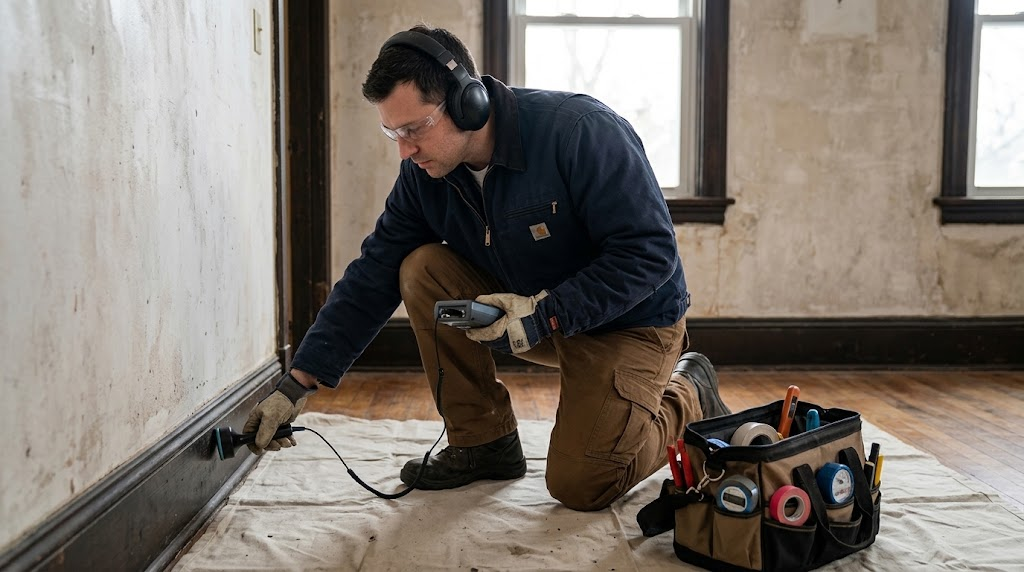
Concealed Water Intrusion in Manhattanville's Varied Architecture
Manhattanville presents one of the most architecturally diverse plumbing landscapes in Upper Manhattan. From historic pre-war apartment buildings along Broadway and Old Broadway to converted industrial properties near the 125th Street corridor and mid-century multi-family developments, plumbing layouts frequently feature concealed utility shafts and shared vertical wet columns. When moisture breaches a pipe inside these structures, water rarely travels straight down. Instead, it migrates across structural joists, follows conduit raceways, and pools in ceiling plaster yards away from the actual pipe fissure.
Traditional, unassisted troubleshooting often results in invasive drywall and tile removal that ruins expensive finishes without locating the pipe defect. Utilizing comprehensive leak detection Manhattanville Manhattan property owners and co-op boards rely on, our technicians methodically isolate pressurized supply lines from sanitary drainage stacks to discover the true source of water intrusion.
Locating a concealed leak and performing the physical plumbing restoration are two distinct steps. Non-invasive diagnostics indicate the precise coordinates of the pipe defect. Once verified, a surgical opening in the building finish is established so our technicians can carry out localized pipe patching or comprehensive line renewal.
Warning Signs of Concealed Plumbing Leaks
Because pressurized water pipes run enclosed within partition walls, subfloors, and ceiling plenums, early warning signals can be subtle. Identifying these symptoms early prevents dry rot, mold blooms, and ceiling cave-ins:
Stained or Sagging Drywall
Brown water rings, bubbling latex paint, or bowed ceiling plaster often indicate water collecting above the finished surface from a pressurized branch line or upper riser.
Unexplained Water Meter Spin
When all fixtures, ice makers, and washing machines are off, continuous movement on your utility meter points directly to an active, pressurized supply leak.
Faint Hissing or Rushing Water
Hearing constant water flow or a distant hiss inside silent bathroom or kitchen walls during late night hours is a classic symptom of an active pinhole pipe rupture.
Spike in Monthly Water Bills
Sudden jumps in municipal water billing without changes in household occupancy often signify gallons escaping beneath building floor slabs or inside service entries.
Localized Warm Spots on Floors
Unusually warm hardwood boards or ceramic tiles in bathrooms and hallways typically signal a rupture in an embedded domestic hot water supply line.
Persistent Musty Odors
Damp, earthy smells trapped within utility closets or under cabinetry frequently reveal slow capillary seepage soaking interior wall studs and insulation.
Multi-Family & Apartment Leak Challenges
Executing apartment leak detection Manhattanville Manhattan properties require demands an intimate understanding of shared plumbing anatomy. In multi-story buildings, domestic cold water, recirculating hot water, fire standpipes, and sanitary waste vents share narrow vertical chase walls. A failure on the fifth floor can travel downward along pipe insulation before presenting as a saturated ceiling in a second-floor unit.
Furthermore, distinguishing between an active supply line leak and an intermittent drainage failure is critical. Supply lines remain under constant 45 to 70 PSI pressure, producing steady, nonstop dripping. Drainage leaks, by contrast, only generate moisture when bathtubs are drained, toilets flushed, or washing machines cycled. Identifying these patterns allows technicians to narrow down testing without disrupting neighboring residences unnecessarily.
Whether dealing with a mysterious leak in wall detection Manhattanville Manhattan scenario, a localized ceiling leak repair Manhattanville Manhattan project, or an active water leak from upstairs apartment Manhattanville Manhattan issue, methodical diagnostic isolation establishes clear technical facts for property owners, superintendents, and insurance adjusters.
How Professional Leak Detection Works
We approach every concealed leak with a four-stage diagnostic framework designed to maximize accuracy and minimize structural disruption:
Visual & Moisture Mapping
Using non-destructive pinless moisture meters and infrared thermography to map hidden moisture boundaries across walls, ceilings, and flooring.
System Pressure Isolation
Conducting hydrostatic and pneumatic drop tests on individual cold, hot, and heating loops to verify exactly which piping system is losing volume.
Acoustic Triangulation
Deploying ground microphones and contact probes to isolate the distinct high-frequency frequency hiss generated by water escaping under pressure.
Targeted Access & Plan
Marking the exact physical repair point, allowing technicians to make a surgical opening directly over the failed pipe segment.
If water is rapidly saturating ceiling plaster, bulging overhead, or dripping near electrical breaker boxes, ceiling lights, or wiring channels, take immediate safety precautions:
- Stay Away from Wet Fixtures: Do not flip electrical switches, touch saturated light fittings, or enter rooms with pooled water touching baseboards.
- Shut Down Local Water: Locate the apartment's main shutoff valve (often behind access panels in the bathroom or under kitchen sinks) and turn the handle clockwise until closed.
- Alert Building Management: In multi-family dwellings, immediately inform building staff so common risers can be shut off if the failure resides inside vertical stacks.
Comprehensive Plumbing Services in Manhattanville
Finding a leak is the first step toward restoring plumbing integrity. Our technicians deliver full-spectrum repair and maintenance across all related plumbing infrastructure:
Pipe Leak Repair
Fast mechanical repairs and copper sweating for localized pinholes, burst joints, and cracked interior water lines.
Explore Pipe Repairs →Repiping
Whole-building and vertical riser replacement for aging, rusted galvanized pipes prone to chronic cascading leaks.
Explore Repiping Options →Water Heater Repair
Resolving hot water loss, pressure relief valve weeping, and tank containment failures on gas and electric units.
Explore Water Heater Service →Boiler Repair
Troubleshooting steam boilers, hydronic radiators, circulating pumps, and low-water cutoff safety systems.
Explore Boiler Services →Gas Line Repair
Pressure decay testing, appliance hookups, and NYC Local Law 152 compliance testing for building gas piping.
Explore Gas Line Services →Drain Cleaning
Clearing stubborn main sewer clogs, kitchen grease blockages, and slow fixture drains with heavy-duty mechanical snakes.
Explore Drain Cleaning →Backflow Testing
Annual NYC DEP testing, certification filing, and containment device repairs to protect potable drinking water.
Explore Backflow Services →Toilet & Faucet Repair
Fixing running toilets, damaged wax seals leaking through subfloors, and dripping cartridge faucets wasting water.
Explore Fixture Repairs →Water Service Line Repair
Investigating underground supply line failures between the municipal water main and the interior building shutoff.
Explore Service Line Repairs →Serving Manhattanville & Adjacent Upper Manhattan Neighborhoods
While centered in Manhattanville, our service team routinely handles concealed pipe diagnostics across the surrounding Upper Manhattan communities. If you require leak detection near West Harlem, reliable leak detection near Morningside Heights, or specialized diagnostic technicians for brownstone shafts providing leak detection near Hamilton Heights, our plumbers are familiar with the area's pre-war plumbing and modern construction codes.
Visit our detailed Service Areas page for specific architectural notes and building infrastructure considerations across Northern Manhattan, or reach out to our team directly on our Contact page.
Frequently Asked Questions About Leak Detection
Technicians employ a multi-layered diagnostic protocol. We utilize infrared thermographic cameras to spot subtle temperature differences where wet insulation or concrete conducts heat differently than dry wallboard. In pressurized supply lines, acoustic listening disks and ground probes isolate the micro-vibrations created by water escaping pinhole openings. When coupled with line isolation tests, these tools pinpoint the pipe breach without invasive demolition.
In New York City co-ops, condominiums, and rental buildings, responsibility depends on the pipe's location and function. Vertical risers and main building waste stacks are generally common elements managed by building ownership or the board. Branch lines extending from the riser to individual sinks, bathtubs, or toilets are typically the unit owner's responsibility. Our diagnostic findings provide written documentation detailing the line type and location to help clarify responsibility.
No ethical plumbing professional can guarantee that drywall or plaster will never need to be accessed. Electronic tools pinpoint the exact coordinates of the failure. To perform permanent repairs—such as soldering copper, pressing fittings, or replacing cast iron fittings—a physical opening must be made. However, acoustic detection ensures that the opening is small and targeted directly over the defect rather than tearing down entire walls.
First, never touch wet light switches or electrical appliances. Place a bucket or plastic basin under the dripping point to collect water and protect flooring. If safe to do so, locate your apartment's primary shutoff valve and close it. If you reside in a multi-family building, notify the building superintendent immediately to inspect whether an upstairs resident has had an overflow or broken supply line, then contact our diagnostic team for line testing.